
Shortlist the right partner
Move from factory search to a defensible shortlist
Porcelain, stoneware, and bone chinaShortlisting by production fitSamples, QC, and shipment controlBuilt for active supplier selection
Looking for a ceramic tableware factory in Bangladesh? Eternal Hotel Supplies helps European buyers move from broad factory search into buyer-side shortlisting, qualification, QC planning, and export coordination across porcelain, stoneware, and bone china production partners.
A buyer searching for a ceramic tableware factory in Bangladesh is usually trying to solve a shortlist problem rather than collect factory names. The real question is which production partners are suited to the body type, finish, decoration method, order profile, and repeat-order expectations behind the brief. This page covers the Bangladesh ceramic tableware factory and manufacturer landscape for European buyers - including the major production zones, the leading Bangladesh ceramic manufacturers by export performance, and the qualification process that turns factory research into a manageable shortlist.
That is where Eternal Hotel Supplies fits. We do not claim plant ownership. We help European buyers move from broad factory and manufacturer search intent into a narrower shortlist of Bangladesh production partners that can be sampled, reviewed, and qualified properly.
The difference matters commercially. A poor shortlist wastes sample rounds, delays the first shipment, and makes repeat-order management harder later. A disciplined shortlist gives the buyer a realistic path into first approval, first production, and first shipment without pretending every factory is equally suited to every program.
The Bangladesh ceramic industry is organised under the Bangladesh Ceramic Manufacturers and Exporters Association, known as BCMEA. The association represents more than 70 active member companies across the production spectrum, from large export-oriented vitrified porcelain facilities to smaller specialist producers working in stoneware, bone china, and decorative ceramics. Bangladesh's ceramics sector exports to more than 50 countries, with European hotel group accounts, HoReCa distributors, and tableware importers representing a significant share of export-facing volumes.
The sector's export position strengthened materially from 2023 onwards as European buyers began reviewing their China sourcing exposure. The EU's confirmed anti-dumping measures on Chinese-origin ceramic tableware — applying a combined rate that materially increases the landed cost of covered Chinese goods into European markets — made Bangladesh's preferential trade status commercially significant for European importers for the first time at scale. Bangladesh-origin ceramic tableware qualifies for GSP preferential treatment on eligible EU imports, which can result in a zero or near-zero import duty rate compared to the significant anti-dumping surcharge applied to covered Chinese goods. This duty differential is now one of the primary drivers behind European buyers actively searching for Bangladesh production partners.
Understanding this context is important for factory search because it means the Bangladesh ceramics sector has been scaling export capacity and improving European-market alignment faster than at any prior point. Not all factories have adapted at the same pace or to the same standard. Some facilities have invested heavily in export packing systems, QC infrastructure, GSP documentation capability, and repeat-order management for European accounts. Others remain primarily domestic-facing and lack the process discipline that European importers require. Shortlisting correctly — by export capability and product fit rather than by directory position or price quote alone — is the single most important thing a buyer can do before the first sample request.
Bangladesh's tableware sector comprises 20 production companies within the BCMEA membership, with a combined annual production capacity of approximately 2,922 lakh pieces - just under 300 million pieces per year. In FY 2023-24, the sector exported BDT 514 crore worth of tableware, equivalent to approximately US$43 million, to more than 50 countries. Italy was the single largest European export destination at 21.81 percent of total tableware export value, followed by Germany at 16.75 percent. The following profiles are drawn from official BCMEA Annual Report 2023-24 data and are presented as a buyer intelligence reference - not as sourcing endorsements. Every factory requires direct qualification before any program is placed.
For teams researching Bangladesh ceramic manufacturers or Bangladesh tableware manufacturers, this is the more useful starting point than a generic top-10 list because it combines names with production scale, machinery sourcing, workforce size, and reported export behaviour in the same place.
| Factory | Location Zone | Capacity (lakh pcs/yr) | Export FY23-24 | Employees | Machinery |
|---|---|---|---|---|---|
| Star Porcelain | Habiganj | 125 | BDT 90.72 cr | ~1,000 | Italy, Germany |
| Shinepukur | Gazipur | 220 | BDT 81.38 cr | ~3,000 | Japan, Germany, France |
| Paragon Ceramic | Gazipur | 223.20 | BDT 71.27 cr | ~1,443 | Japan, China |
| Artisan Ceramics | Gazipur | 120 | BDT 65 cr | ~800 | Japan, China, Taiwan |
| Akij Tableware | Mymensingh | 250 | BDT 56.89 cr | ~1,800 | Italy, Spain, Germany |
| Protik Ceramics | Dhamrai | 252 | BDT 30.59 cr | ~1,850 | Japan, Germany, China |
| FARR Ceramics | Gazipur | 252 | N/A | N/A | Japan, Italy, Germany |
| Bengal Fine | Savar | 240 | Nil FY23-24 | ~500 | Italy, Japan, China |
| Standard Ceramic | Gazipur | 234 | N/A | N/A | Japan |
| Monno Ceramic | Dhamrai | 200 | BDT 0.74 cr | ~400 | Japan, Germany, England |
| Peoples Ceramic | Tongi | 160 | BDT 0.50 cr | ~750 | Japan |
| Tajma Ceramic | Bogura | 70 | Nil FY23-24 | ~250 | Japan |
Highlighted rows are the four factories that generated the majority of Bangladesh's tableware export value in FY 2023-24. Open any dossier below for the full official profile, machinery sourcing, floor space, and buyer-relevant notes. Source: BCMEA Annual Report 2023-2024. N/A indicates data not separately published in the BCMEA report for that company. Capacity figures are approximate as stated by companies to BCMEA.
| Official product category | Porcelain and Bone China Tableware |
|---|---|
| Location | BEXIMCO Industrial Park, Sarabo, Kashimpur, Gazipur |
| Established | Year incorporated: 1997 | Year production began: 1999 |
| Legal status | Public Limited Company |
| Annual capacity | 220 lakh pieces (approximately 22 million pieces per year) |
| Export FY 2023-24 | BDT 81.38 crore (approximately US$7.4 million) |
| Employees | approximately 3,000 |
| Machinery | Japan, Germany, France |
| Website | shinepukur.com |
Shinepukur is Bangladesh's most internationally referenced bone china and porcelain producer for European markets. Its 3,000-strong workforce is the largest employee count of any Bangladesh tableware producer in the BCMEA data. Its machinery from Japan, Germany, and France is a production quality signal relevant to European buyers evaluating finish and consistency standards. Export of BDT 81.38 crore in FY 2023-24 confirms active international account servicing. For bone china programs specifically, Shinepukur is the primary Bangladesh reference point against which other bone china capability claims are benchmarked.
| Official product category | Porcelain Tableware |
|---|---|
| Location | Horitola, Shahapur, Baghasura, Madhabpur, Habiganj (approximately 138 km northeast of Dhaka) |
| Established | Year incorporated: 2012 | Year production began: 2015 |
| Legal status | Private Limited Company |
| Annual capacity | 125 lakh pieces (approximately 12.5 million pieces per year) |
| Export FY 2023-24 | BDT 90.72 crore (approximately US$8.25 million) - the highest tableware export value of any single Bangladesh company in FY 2023-24 |
| Employees | approximately 1,000 |
| Machinery | Italy and Germany |
| Website | arianeporcelain.com |
Star Porcelain's export of BDT 90.72 crore in FY 2023-24 makes it Bangladesh's single highest-value tableware exporter by official BCMEA data - ahead of Shinepukur (BDT 81.38 crore) and Paragon (BDT 71.27 crore) in the same period. Its Italian and German machinery, European-market-oriented website (arianeporcelain.com), and Habiganj location outside the Gazipur cluster make it a distinct profile. For European buyers, its top export ranking in the most recent annual data is the primary qualification signal.
| Official product category | Porcelain Tableware |
|---|---|
| Location | Dogori (Nayapara), Mirzapur, Gazipur (approximately 50 km north of Dhaka) |
| Established | Year incorporated: 2008 | Year production began: 2011 |
| Legal status | Private Limited Company |
| Annual capacity | 223.20 lakh pieces (approximately 22.3 million pieces per year) |
| Export FY 2023-24 | BDT 71.27 crore (approximately US$6.5 million) |
| Local sales FY 2023-24 | BDT 81.04 crore |
| Employees | approximately 1,443 |
| Machinery | Japan and China |
| Factory floor space | 45,000 square metres |
| Website | paragonceramicbd.com |
Paragon is a Gazipur-zone vitrified porcelain producer with consistent export performance. Its Mirzapur location within Gazipur district provides access to the primary export cluster's infrastructure - gas supply, logistics, skilled labour. Production capacity of 22.3 million pieces per year and BDT 71.27 crore export in FY 2023-24 confirm sustained European and international account activity.
| Official product category | Porcelain Tableware |
|---|---|
| Location | Shirirchala, Bager Bazar, Bhabanipur, Gazipur |
| Established | Year incorporated: 2004 | Year production began: 2005 |
| Legal status | Private Limited Company |
| Annual capacity | 120 lakh pieces (approximately 12 million pieces per year) |
| Export FY 2023-24 | BDT 65 crore (approximately US$5.9 million) |
| Local sales FY 2023-24 | BDT 30 crore |
| Employees | approximately 800 |
| Machinery | Japan, China, Taiwan |
| Factory floor space | 25,000 square metres |
| Website | artisan.com.bd |
Artisan Ceramics has a strong export-to-domestic ratio - BDT 65 crore export versus BDT 30 crore local sales, meaning approximately 68 percent of revenue is export-derived. This export-orientation profile is directly relevant for European buyers assessing whether a factory's operational focus aligns with European account requirements.
| Official product category | Tableware |
|---|---|
| Location | Mukkhopur, Trishal, Mymensingh (approximately 97 km north of Dhaka) |
| Established | Year tableware production began: 2021 |
| Legal status | Private Limited Company |
| Annual capacity | 250 lakh pieces (approximately 25 million pieces per year) - the largest single stated tableware production capacity in the official BCMEA data |
| Export FY 2023-24 | BDT 56.89 crore (approximately US$5.2 million) |
| Local sales FY 2023-24 | BDT 206.15 crore |
| Employees | approximately 1,800 |
| Machinery | Italy, Spain, Germany, Turkey, China |
| Factory floor space | 160,000 square metres |
| Website | akijceramics.net |
Akij's tableware unit has the largest stated production capacity of any single Bangladesh tableware operation in the BCMEA data. Its Mymensingh location is outside the primary Gazipur cluster. The tableware unit began production only in 2021 - giving it a shorter European export track record than Gazipur-zone competitors - but its European and premium machinery sourcing (Italy, Spain, Germany) is a positive production quality signal.
| Official product category | Porcelain Tableware |
|---|---|
| Location | Noulapara, Bhabanipur, Sreepur, Gazipur |
| Established | Year incorporated: 2005 | Year production began: 2007 |
| Legal status | Private Limited Company |
| Annual capacity | 252 lakh assorted pieces (approximately 25.2 million pieces per year) |
| Machinery | Japan, Italy, Germany |
| Factory floor space | 30,000 square metres |
| Website | farr.com.bd |
FARR Ceramics is located within the Sreepur, Gazipur production zone alongside other export-facing tableware operations. Its machinery from Japan, Italy, and Germany is consistent with the premium production tier. BCMEA General Secretary Irfan Uddin is a director of FARR Ceramics, confirming its central role in Bangladesh's export ceramic sector.
| Official product category | Ceramic Porcelain Tableware |
|---|---|
| Location | Dautia, Kalampur, Dhamrai, Dhaka (approximately 45 km southwest of Dhaka) |
| Established | Year incorporated: 2008 | Year production began: 2011 |
| Legal status | Private Limited Company |
| Annual capacity | 252 lakh pieces (approximately 25.2 million pieces per year) |
| Export FY 2023-24 | BDT 30.59 crore (approximately US$2.8 million) |
| Local sales FY 2023-24 | BDT 119.16 crore |
| Employees | approximately 1,850 |
| Machinery | Japan, Germany, China |
| Factory floor space | 200,881 square metres - the largest production floor space of any Bangladesh tableware facility in the official BCMEA data |
| Website | protikceramics.com |
Protik Ceramics has the largest production floor space (200,881 sq m) of any Bangladesh tableware operation in the BCMEA data, paired with 252 lakh pieces per year capacity and approximately 1,850 employees - one of the highest workforce counts among exporters. Related entity Protik Fine Ceramics (protikfineceramics.com) operates on the same Dhamrai site.
| Official product category | Tableware (stoneware) |
|---|---|
| Location | Bhagalpur, Savar, Dhaka (approximately 30 km southwest of Dhaka) |
| Established | Year incorporated: 1985 | Year production began: 1986 |
| Legal status | Private Limited Company |
| Annual capacity | 240 lakh pieces (approximately 24 million pieces per year) |
| Export FY 2023-24 | Nil |
| Employees | approximately 500 |
| Machinery | Italy, Japan, China |
| Website | bengalfineceramics.com |
Bengal Fine Ceramics is officially the first Bangladesh company to produce stoneware - using local Mymensingh white clay to create a distinct body product - and holds that historical significance in the BCMEA record. Its current export figure of nil in FY 2023-24 is a material qualification point: despite its history and 240 lakh pieces per year capacity, Bengal Fine was not actively exporting in the most recent reported period. European buyers should verify current export status and European account experience directly before shortlisting.
| Official product category | Ceramic Stoneware Tableware |
|---|---|
| Location | Saydana, K.B. Bazar, Gazipur Sadar, Gazipur |
| Established | Year incorporated: 1984 | Year production began: 1993 |
| Legal status | Public Limited Company |
| Annual capacity | 234 lakh pieces (approximately 23.4 million pieces per year) |
| Machinery | Japan |
| Website | standardceramic.net |
Standard Ceramic is one of the very few Bangladesh facilities officially classified as a stoneware tableware producer in BCMEA data - a designation that distinguishes it from the majority of porcelain-classified operations. Its Gazipur Sadar location places it in the primary production cluster. Its 1984 incorporation gives it one of the longer production histories among active Bangladesh tableware companies.
| Official product category | Porcelain Tableware |
|---|---|
| Location | Islampur, Dhamrai, Dhaka (approximately 40 km southwest of Dhaka) |
| Established | Year incorporated: 1983 | Year production began: 1985 |
| Legal status | Public Limited Company |
| Annual capacity | 200 lakh pieces (approximately 20 million pieces per year) |
| Export FY 2023-24 | BDT 0.74 crore |
| Local sales FY 2023-24 | BDT 24.29 crore |
| Employees | approximately 400 |
| Machinery | Japan, Germany, England, Italy, China |
| Factory floor space | 60,000 square metres |
| Website | monno.com |
Monno Ceramic has the longest production history of the active Bangladesh tableware manufacturers (production since 1985) and was Bangladesh's first company to export ceramic tableware to international markets. Its export of BDT 0.74 crore in FY 2023-24 represents a significant decline from its historical export prominence - context that is directly relevant for European buyers. Associated entity Monno Bone China Limited (same Dhamrai address, separate company, 50 lakh pieces per year bone china capacity, approximately 200 employees, machinery from Japan, Germany, China, India) operates as a specialist bone china producer on the same site.
| Official product category | Feldspar Porcelain Tableware |
|---|---|
| Location | 80-81, Tongi Industrial Area, Tongi, Gazipur |
| Established | Year incorporated: 1962 | Year production began: 1966 |
| Legal status | Private Limited Company |
| Annual capacity | 160 lakh assorted pieces (approximately 16 million pieces per year) |
| Export FY 2023-24 | BDT 0.50 crore |
| Local sales FY 2023-24 | BDT 54 crore |
| Employees | approximately 750 |
| Machinery | Japan |
| Factory floor space | 12,000 square metres |
| Website | peoplesceramic.com |
Peoples Ceramic's 1962 incorporation makes it Bangladesh's oldest continuously operating tableware manufacturer and one of the original Bangladesh ceramic exporters to European markets (Holland and United Kingdom from 1982). Like Monno, its current export figure (BDT 0.50 crore) is substantially lower than its historical prominence. Current European qualification is required before placement in any European program.
| Official product category | Porcelain Tableware |
|---|---|
| Location | Sherpur Road, Bogura (approximately 196 km north of Dhaka) |
| Established | Year incorporated: 1959 | Year production began: 1960 |
| Legal status | Private Limited Company |
| Annual capacity | 70 lakh pieces (approximately 7 million pieces per year) |
| Export FY 2023-24 | Nil |
| Local sales FY 2023-24 | BDT 8.5 crore |
| Employees | approximately 250 |
| Machinery | Japan |
Tajma is Bangladesh's first ceramic factory, established in Bogura in 1959 with production beginning in 1960. Its current scale (70 lakh pieces per year, 250 employees) is smaller than Gazipur-zone competitors and its FY 2023-24 export was nil. For European buyers, Tajma's primary relevance is as the historical anchor of the Bogura production cluster - its location establishes the geographic origin of Bangladesh's ceramics industry outside the main Gazipur zone.
This factory intelligence is drawn from the official BCMEA Annual Report 2023-2024 and represents verified production and export data for Bangladesh's tableware producers at the time of publication. Export performance, production capacity, and market orientation change between reporting periods. Every factory profile should be treated as a starting point for qualification research, not as a current commercial recommendation. The qualification process - body type confirmation, export packing standards, QC inspection access, GSP documentation capability, and repeat-order management evidence - is what determines whether any of these facilities is the right partner for a specific European program.
~300M
Pieces produced annually
US$43M
Tableware export value FY 2023-24
US$1.675B
Total ceramic sector investment
500,000+
People employed (direct & indirect)
150%
Investment growth over 10 years
50+
Export destination countries
All figures below are from the official BCMEA Annual Report 2023-2024 unless otherwise noted.
The Bangladesh ceramic sector across all product categories - tableware, tiles, sanitaryware, and ceramic bricks - represents a total investment of BDT 18,425.98 crore, equivalent to more than US$1,675 million. The tableware segment specifically accounts for BDT 3,299.48 crore of that investment. Total direct and indirect employment across all ceramic categories exceeds 500,000 people. Investment and production growth over the past 10 years has been 150 percent.
For the tableware segment specifically in FY 2023-24: 20 companies are active, with combined annual production capacity of 2,922 lakh pieces - approximately 292 million pieces per year. Total tableware export was BDT 514.03 crore (approximately US$43 million). Female workers make up an average of 55 percent of the tableware factory workforce. Value addition in the sector is 60 percent.
The tableware export destination breakdown for FY 2023-24 by percentage share is: Italy 21.81 percent, Germany 16.75 percent, United States 8.99 percent, Greece 5.77 percent, Poland 5.59 percent, Norway 5.27 percent, India 5.27 percent, Great Britain 5.02 percent, Turkey 4.33 percent, Belgium 3.59 percent, Netherlands 3.25 percent, Switzerland 3.07 percent, Sweden 2.36 percent, Spain 2.30 percent, Denmark 1.75 percent. The remaining share covers UAE, South Africa, Thailand, Canada, and others.
Italy and Germany together account for more than 38 percent of Bangladesh's total tableware export value - confirming that European hospitality and distributor accounts are the primary destination market for Bangladesh's export-oriented tableware sector. For a European procurement manager, that is more meaningful than a generic claim that Bangladesh exports globally: it shows that the sector is already configured around the product standards and logistics expectations of European receiving markets.
Bangladesh's share of world tableware exports in 2023 was 0.40 percent of a global market valued at approximately US$11.7 billion. For European buyers, this share figure has two implications. The sector is large enough to supply substantial European programs at consistent volume - nearly 300 million pieces of annual capacity is not a cottage industry. And it is still small enough relative to global trade that the best Bangladesh factories are not yet oversubscribed with European account demand in the way that leading Chinese factories are.
Raw material sourcing: Bangladesh's ceramic sector imports approximately 95 percent of production raw materials. The primary materials and their dominant import sources as of FY 2023-24 are: ball clay primarily from Malaysia (88.74 percent of imports), feldspar primarily from Thailand (57.93 percent), china clay primarily from India (78.62 percent), and quartz primarily from India (90.56 percent). This dependence on imported raw materials means that Bangladesh's export-grade ceramic production quality is benchmarked against internationally sourced inputs rather than relying on domestic raw material quality.
The official BCMEA ceramic industry timeline runs as follows, drawn from the BCMEA Annual Report 2023-2024.
1958-1960
Bangladesh's first ceramic factories
Mirpur Ceramic Works and Tajma Ceramic Industries begin production in Dhaka and Bogura.
1958-1960: Mirpur Ceramic Works Limited begins producing ceramic bricks at Mirpur-12, Dhaka - establishing Bangladesh's first ceramic production facility. Tajma Ceramic Industries begins earthen tableware production at Bogura in the same period.
1966
First modern porcelain tableware
Peoples Ceramic Industries starts production at Tongi, Gazipur using Japanese technology.
1966: Peoples Ceramic Industries Limited starts production using modern porcelain tableware technology at Tongi, Gazipur - Bangladesh's first modern feldspar porcelain tableware operation.
1974
First sanitaryware production
Dacca Ceramics and Sanitarywares begins production at Tongi, Gazipur.
1974: Dacca Ceramics and Sanitarywares Limited starts Bangladesh's first sanitaryware production at Tongi, Gazipur.
1982
First European exports
Peoples Ceramic begins exporting to Holland and the United Kingdom - Bangladesh's first ceramic exports to European markets.
1982: Peoples Ceramic Industries begins exporting to Holland and the United Kingdom - the first Bangladesh ceramic exports to European markets on record.
1983-1985
Monno Ceramic established
Bangladesh's first company to actively export ceramic tableware to international markets at scale.
1983-1985: Monno Ceramic Industries Limited is incorporated and begins production. Monno becomes Bangladesh's first company to actively export ceramic tableware to international markets at scale.
1984-1986
Stoneware capability added
Standard Ceramic Industries and Bengal Fine Ceramics established, bringing stoneware production to Bangladesh.
1984-1986: Standard Ceramic Industries and Bengal Fine Ceramics are established, adding stoneware capability to the Bangladesh production base.
1992
BCMEA founded
Bangladesh Ceramic Manufacturers and Exporters Association established as the national trade body.
1992: BCMEA is formally established as Bangladesh's national trade organisation for ceramic manufacturers and exporters.
1997-1999
World-class bone china production begins
Shinepukur Ceramics incorporated by BEXIMCO Group, establishing Bangladesh's first premium bone china operation using Japanese, German, and French machinery.
1997-1999: Shinepukur Ceramics Limited is incorporated by the BEXIMCO Group and begins porcelain and bone china production using Japanese, German, and French machinery - establishing Bangladesh's first world-class bone china production operation.
2004-2011
New generation of Gazipur exporters
Artisan Ceramics, FARR Ceramics, Paragon Ceramic Industries, and Protik Ceramics established, adding 80+ million pieces per year of export-facing capacity.
2004-2011: A new generation of Gazipur-zone producers - Artisan Ceramics, FARR Ceramics, Paragon Ceramic Industries, Protik Ceramics - is established, collectively adding more than 80 million pieces per year of additional export-facing porcelain capacity.
2021
Largest single tableware capacity launched
Akij Ceramics launches tableware unit at Mymensingh - 250 lakh pieces per year, the largest stated capacity in the BCMEA data.
2021: Akij Ceramics launches its tableware unit at Mymensingh with 250 lakh pieces per year capacity - the largest single tableware production capacity in the current BCMEA data.
For European buyers, this timeline answers the stability question that procurement teams typically ask: Bangladesh has been producing and exporting ceramic tableware to European markets for more than 40 years. The current wave of European buyer interest is not creating the industry - it is expanding access to one that has been supplying European accounts since the early 1980s.
The official BCMEA data shows 20 tableware companies with a combined production capacity approaching 300 million pieces per year. That figure can give a misleading impression of uniformity. The 20 companies are not interchangeable.
The factory-level export data from FY 2023-24 makes the stratification clear. Of the 12 tableware companies with export data recorded in the BCMEA report, four generated the majority of total tableware export value: Star Porcelain (BDT 90.72 crore), Shinepukur (BDT 81.38 crore), Paragon (BDT 71.27 crore), and Artisan Ceramics (BDT 65 crore). Two more - Akij Tableware and Protik Ceramics - contributed meaningful export volumes. Several historically significant producers including Monno Ceramic and Peoples Ceramic recorded near-nil exports in the same period. Bengal Fine Ceramics and Tajma recorded zero exports.
This stratification is not a criticism of individual companies. It reflects the reality that factories adapt their market orientation over time, and that export-market focus requires ongoing investment in European-standard QC infrastructure, documentation systems, and account management capability. Some facilities have maintained that investment; others have shifted toward the domestic Bangladesh market, which has also grown substantially.
For European buyers, the practical implication is straightforward: shortlisting should start with the companies that were actively exporting in the most recent period - primarily the Gazipur and Habiganj zone export-oriented facilities - rather than with the full 20-company tableware membership. Name recognition and production history are useful context but are not substitutes for current export activity data.
This is precisely where buyer-side sourcing support provides the most practical value. The pre-filtering - from 20 BCMEA tableware members to a shortlist of 3 to 5 that match the specific brief and have current European export experience - is work that takes weeks of market research to do properly from Europe and that an active Bangladesh sourcing presence can compress into days.
Bangladesh's ceramic production is geographically concentrated in a set of industrial clusters around Dhaka and in the wider central and northern belt.
Gazipur district, north of Dhaka, is the largest and most significant ceramic production zone in Bangladesh. Several of the country's largest export-oriented ceramic facilities operate within Gazipur, including facilities with tunnel kiln systems capable of firing vitrified porcelain bodies at commercial export volumes. Gazipur's proximity to Dhaka and its established industrial infrastructure — power supply, gas supply, logistics access — make it the primary zone for buyers sourcing mainstream porcelain and high-volume hospitality ware.

Bogura, in the Rajshahi division of northern Bangladesh, hosts a secondary cluster of ceramic producers. Bogura factories tend to be smaller and more specialist, with a stronger presence in decorative ceramics, earthenware, and certain stoneware ranges. For buyers looking for more bespoke or design-led production outside the mainstream Gazipur porcelain segment, Bogura can be a relevant zone to explore.
Narsingdi and Tongi supply additional production capacity at the mid-scale level, with a mix of porcelain and earthenware facilities serving both domestic and export markets. These zones are less consistently export-ready than Gazipur but relevant for certain program types where Gazipur's larger MOQ requirements are not suited to the buyer's order profile.
For European buyers, understanding the geographic cluster matters because it affects logistics, lead time, and the realistic production options available at a given order size. Gazipur is the anchor zone for any serious export-facing porcelain or hospitality ware search.
Porcelain is the dominant segment of Bangladesh's export-facing ceramic capacity. The principal export-oriented porcelain factories in Bangladesh use tunnel kiln systems, firing vitrified porcelain bodies at temperatures between 1,280 and 1,300 degrees Celsius. At these temperatures the clay body fully vitrifies — meaning it becomes dense, non-porous, and mechanically strong. This is the standard production method for hotel-grade whiteware and restaurant service ware destined for European distribution.
Bangladesh porcelain factories are primarily configured for mainstream whiteware production: coupe plates, rim plates, bowls, cups, saucers, ramekins, and multi-piece sets in standard hospitality and foodservice sizes. The larger, more export-oriented Gazipur-zone facilities have established systems for the kind of high-volume bulk production that hotel group openings and large distributor stock programs require. Repeat-order continuity — the ability to supply replacement stock that matches the approved first shipment in colour, profile, and finish — is the key operational capability that separates strong porcelain partners from weaker ones.
What varies between Bangladesh porcelain factories is not primarily the body standard but the surrounding execution infrastructure. Finish and glaze consistency across production batches, the ability to hold colour and whiteness standards across repeat orders, decoration capability for decal and edge-line programs, export packing quality for European receiving standards, and the factory's experience managing buyer-appointed inspection visits are all points of meaningful difference. A buyer shortlisting Bangladesh porcelain factories should assess all of these rather than treating factories as interchangeable on body type alone.
Bangladesh stoneware factory capacity is more specialist and more limited in volume than the porcelain segment. Stoneware bodies fire at lower temperatures than vitrified porcelain — typically between 1,180 and 1,250 degrees Celsius — producing a denser, coarser body with more surface texture variation and visible glaze character than standard hotel whiteware.
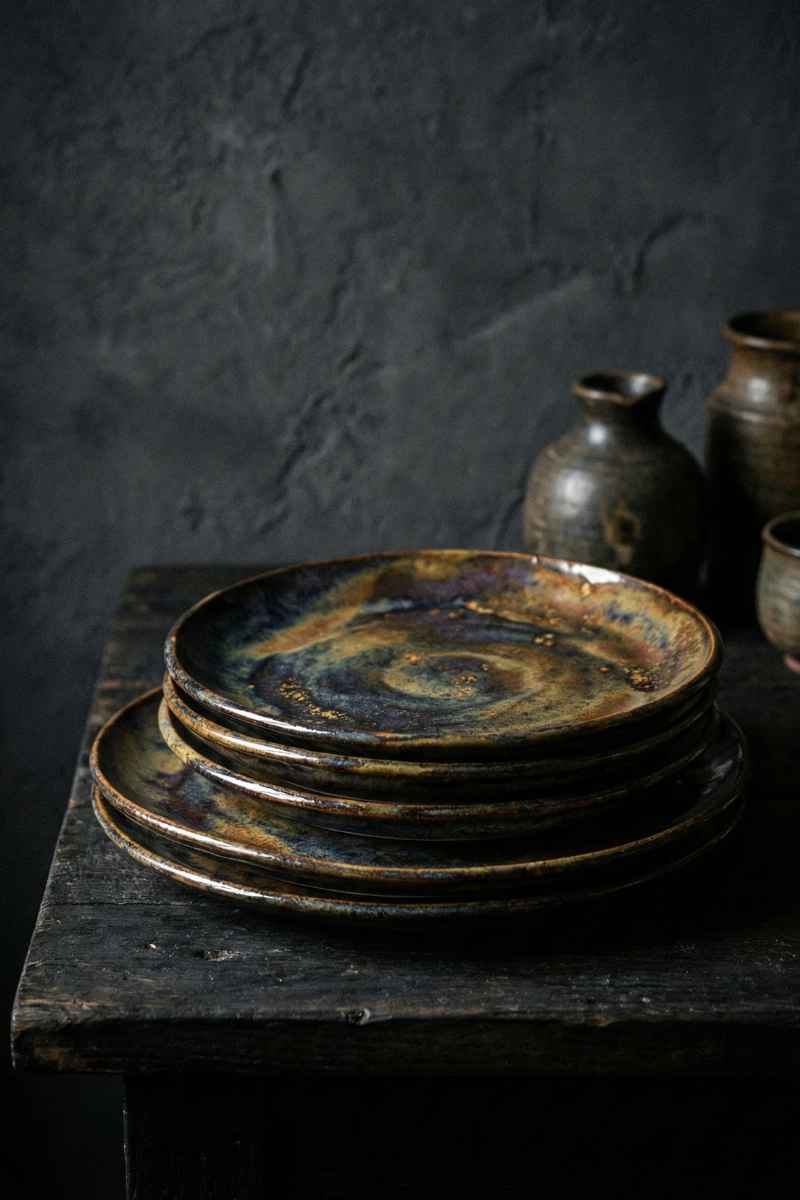
The Bangladesh stoneware segment primarily serves design-led foodservice accounts: boutique hotel restaurants, chef-driven dining concepts, contemporary casual dining operators, and distributors targeting the premium casual and lifestyle tabletop market. Reactive glaze stoneware — where kiln atmosphere and glaze chemistry interact to produce visible colour variation across each individual piece — is one of the stronger Bangladesh factory specialities for European buyers looking for non-standard surface finishes.
Factory selection for stoneware programs is inherently more sensitive than for mainstream porcelain. Design expectations in stoneware are harder to fix through a written specification alone. The factory's experience with creative finish briefs, glaze consistency across batch sizes, and whether their reactive and effect glaze capabilities are based on genuine production experience or catalogue marketing are all critical points to evaluate before sampling begins. Buyers should request reference production examples from live programs rather than studio samples before committing to a stoneware shortlist.
Bone china requires a fundamentally different production setup from standard ceramic factories. The body composition includes calcined bone ash — typically at 30 to 45 percent of the body weight — combined with china clay and feldspathic flux. This compositional requirement means that genuine bone china production requires separate raw material sourcing, dedicated handling infrastructure, and kiln calibration that differs substantially from a standard vitrified porcelain setup.
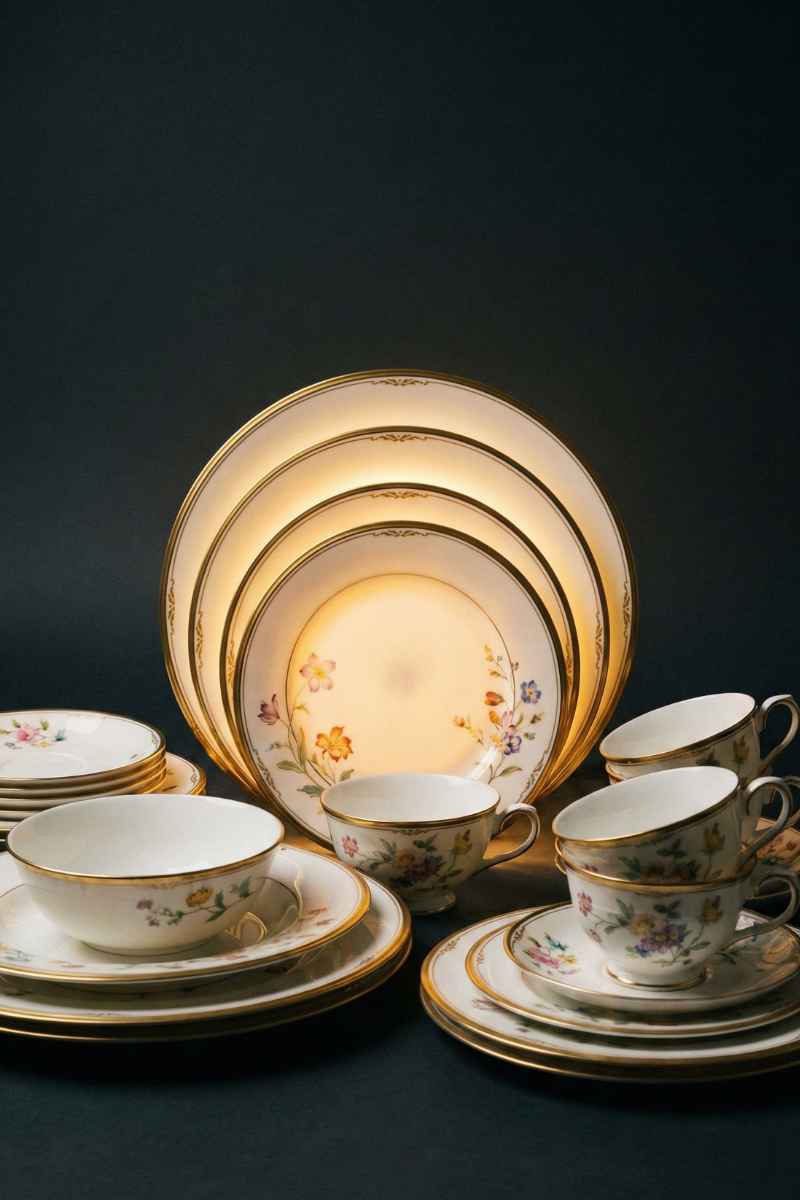
Not all ceramic factories in Bangladesh produce genuine bone china. Among those that do, the facilities most relevant for European luxury hotel and premium distributor programs are the larger, export-oriented operations with verified bone ash sourcing, in-glaze decoration capability, and premium packing systems capable of protecting lighter-bodied and higher-value pieces through sea freight to Europe.
Buyers shortlisting Bangladesh bone china factories should confirm that the facility is genuinely producing a calcined bone ash body rather than a high-alumina or reinforced porcelain body described under a similar commercial name. The practical qualification tests are: whiteness above a commercially usable threshold for the luxury program intended, visible translucency when held to a light source with a text object behind the piece, rim profile holding within tolerance across a production run, and packing systems designed to protect lighter-bodied pieces through long-haul freight without avoidable rim or edge damage. Premium drift — where a replacement shipment arrives visibly different from the opening order in whiteness or profile — is expensive to correct in a live hotel program and must be addressed through clear reference management before bulk production begins.
This checklist is for buyers who need to move from a broad Bangladesh factory search into a defensible shortlist before sample requests are placed.
Confirm whether the factory genuinely produces the specific ceramic body required: vitrified porcelain, stoneware, or genuine calcined bone ash bone china. Request technical specifications including body composition, firing temperature, and vitrification standard rather than accepting marketing category labels.
Tunnel kiln firing above 1,280 degrees Celsius is expected for export-grade vitrified porcelain. Stoneware typically fires at 1,180 to 1,250 degrees Celsius. Genuine bone china requires separate production infrastructure beyond a standard porcelain setup. These differences are verifiable and matter to product quality.
Confirm the minimum order per SKU, per shape, and per shipment container. Understand whether mixed-shape opening orders are supported and what the pricing and packing logic looks like at the actual order volumes the buyer intends to place.
Check whether in-glaze decal, on-glaze decal, reactive glaze, edge lining, or custom branding is within the factory's active and experienced production capability rather than their marketing catalogue. Request reference production examples from live commercial programs, not studio samples.
Confirm documented experience packing ceramic tableware for European importers: carton labelling standards, inner wrapping and rim protection systems, pallet configuration, and breakage rates on previous export shipments to European destinations.
Confirm whether the factory allows buyer-appointed or buying-house inspection access at pre-production, inline, and pre-shipment stages. For European buyer programs, this is a baseline requirement.
Confirm how the factory retains and manages golden samples after first bulk approval. Reference drift on repeat orders is a common and commercially damaging failure mode in Bangladesh ceramic programs.
Request documented evidence of existing repeat-order accounts, specifically from European hotel or distributor buyers. Production capacity claims are substantially less useful than evidence of successful replenishment supply over multiple seasons.
Confirm the factory can supply Bangladesh-origin preferential documentation required for EU import treatment: Form A or EUR.1 certificate of origin as applicable, commercial invoice, packing list, and any quality or health certificates required for the destination EU market.
Cross-check stated lead times against the actual production calendar, decoration queue, and peak-season scheduling. Ask specifically about how Chinese New Year and Eid periods affect production availability and booking windows.
Factory names are not the same thing as a shortlist. A buyer can identify ceramic factories in Bangladesh from directories, trade-show follow-up, referrals, or search results, but that still does not answer which production partner should receive the first serious sample brief. The shortlist becomes defensible only when the buyer can explain why the selected factory is right for the body type, finish standard, decoration route, MOQ logic, and export discipline of the intended program.
In practical terms, that means moving beyond the broad claim that a supplier makes porcelain, stoneware, or bone china. Buyers need to know whether the supplier can manage the approval logic that sits around the product: golden sample retention, repeat-order colour and profile stability, willingness to host inspection access, and the operational maturity to protect a first shipment headed for a European warehouse, distributor network, or hotel opening.
A defensible shortlist also reflects the intended order pattern. A hotel opening program with broad SKU spread, a distributor stock line with open-stock replenishment, and a chef-led reactive-glaze project do not belong on the same approval path. The right shortlist narrows suppliers by commercial fit first so the sample round produces clear evidence rather than presentation noise.
Sample requests should only be sent once the buyer has decided what the sample is supposed to prove. In many Bangladesh ceramic programs, samples are wasted because too many factories are asked to send too many items before the commercial brief is stable. A better process is to define the priority SKUs, service environment, destination market, and the specific commercial risks that need to be tested: whiteness, glaze feel, reactive variation window, decal placement, stackability, or packing suitability.
Bulk approval then introduces a second layer of validation. The buyer needs written acceptance standards, retained approved references, and agreement on where inspection intervention can take place before problems reach the packed-goods stage. Without those controls, the first production run is judged too late and too subjectively.
Shipment readiness creates a third layer. Export tableware is not only a finished ceramic piece; it is a packed, labelled, documented, and released shipment. That is why container mix, pallet logic, carton labelling, and document timing need to be reviewed alongside the product itself. This is often the stage where a supplier that looked acceptable in samples proves operationally weak.
If the body decision is already narrowing, use the dedicated porcelain factory guidance, stoneware factory guidance, and bone china factory sourcing routes to compare the technical and commercial implications of each material path before the sample round expands.
Eternal Hotel Supplies is not the plant owner. Our role begins where a broad search becomes commercially active. We narrow the supplier field based on body type fit, finish and decoration suitability, MOQ logic, production behaviour, and export readiness. Once the shortlist is credible, we help manage the sample sequence, approval discipline, production follow-up, QC planning, documentation review, and shipment coordination needed to turn a factory search into a working supply route.
That buyer-side layer matters because European importers usually need more than a contact list. They need someone making sure the sample path stays linked to the real commercial brief, that QC intervention points are agreed before production drifts, and that the first shipment is released against standards that internal procurement, quality, and logistics teams can defend.
Buyers who are still at research stage should start with the Bangladesh manufacturers guide. Buyers who are already reviewing specific suppliers usually need factory capability review, QC checkpoint management, and GSP documentation support in parallel so that shortlisting, approval, and shipment release stay commercially aligned rather than being handled as disconnected tasks.
This is why the page sits between a research guide and a normal product page. It is built for the moment when a buyer needs to know which Bangladesh ceramic factory deserves the next conversation, what evidence must be collected before approval, and how that shortlist is managed all the way through to export execution.
No. Eternal Hotel Supplies does not present itself as the plant owner or factory. We work on the buyer side — identifying, qualifying, and managing suitable Bangladesh ceramic production partners across porcelain, stoneware, and bone china programs — so that European buyers have cleaner shortlisting, stronger QC, and more reliable export execution.
The main export-oriented cluster is in Gazipur, north of Dhaka, which hosts the largest vitrified porcelain facilities. Bogura in the Rajshahi division provides a secondary cluster of mid-scale and specialist producers. Narsingdi and Tongi supply additional mid-scale capacity. Gazipur is the primary zone for buyers sourcing mainstream hospitality porcelain at volume.
Porcelain factories fire vitrified clay bodies at 1,280 to 1,300 degrees Celsius in tunnel kilns and represent the largest segment of Bangladesh’s export capacity. Bone china factories require a separate production setup with calcined bone ash in the body composition at 30 to 45 percent by weight, different raw material sourcing, and separate kiln calibration. Fewer Bangladesh facilities produce genuine export-grade bone china compared to standard vitrified porcelain.
The clearest indicators are documented experience shipping to European accounts, GSP origin documentation capability, QC inspection access during production, export packing systems designed for fragile ceramic freight, and verifiable repeat-order management for hotel or distributor programs. Factory size and production claims are less reliable indicators than these practical export-readiness signals.
We narrow a broad factory and manufacturer search into a shortlist based on body type fit, finish and decoration suitability, MOQ logic, and export capability. We then manage sample coordination, QC planning, production follow-up, documentation review, and shipment coordination with the shortlisted production partners.
This page is commercial and action-oriented: it explains the Bangladesh factory landscape, how to evaluate production partners, and how Eternal Hotel Supplies manages that process from shortlist to shipment. The manufacturers guide is a broader informational resource designed for research-stage qualification before a shortlist is built.
Based on FY 2023-24 BCMEA Annual Report data, Star Porcelain Limited was Bangladesh's highest-value tableware exporter with BDT 90.72 crore (approximately US$8.25 million) in export revenue. Shinepukur Ceramics (BDT 81.38 crore) and Paragon Ceramic Industries (BDT 71.27 crore) were the second and third highest tableware exporters by value in the same period. Italy and Germany together accounted for more than 38 percent of Bangladesh's total tableware export value in FY 2023-24.
The number of Bangladesh factories producing genuine bone china for European export programs is small - likely four to six operations with verified bone ash body production and European account experience. The most internationally referenced is Shinepukur Ceramics, which has produced bone china since 1999 using Japanese, German, and French machinery. Monno Bone China Limited (a separate entity from Monno Ceramic Industries, operating on the same Dhamrai site) is a dedicated bone china producer with 50 lakh pieces per year capacity. For buyers specifically evaluating bone china programs, the shortlisting pool is narrower than for mainstream vitrified porcelain, and qualification standards should be correspondingly more rigorous.
Bangladesh's 0.40 percent share of a US$11.7 billion global tableware export market means the sector is commercially established - nearly 300 million pieces of annual production capacity and multi-decade European export relationships confirm that - but not yet dominant in the way that China (28.16 percent share) is. For European buyers, this translates to a supply base that can absorb substantial European programs without the over-subscription and lead time pressure that characterises leading Chinese factories, while still offering the production scale and export infrastructure that European importer programs require.
No - and the official export data confirms why that question matters. Of 20 BCMEA tableware members, the top four by export value in FY 2023-24 accounted for the substantial majority of total tableware export revenue. Several companies with large production capacity recorded near-nil or zero export in the same period. Quality consistency is not a sector-wide guarantee - it is a function of each factory's investment in production infrastructure, QC systems, and European-market alignment. Shortlisting by current export activity, European account experience, and verified production standards is the correct approach - not treating all 20 companies as equivalent options.
The tableware segment alone represents BDT 3,299.48 crore (approximately US$300 million) of the total ceramic sector investment of US$1,675 million. Across the full sector, investment and production growth over the past decade has been 150 percent. This investment scale - combined with 500,000+ direct and indirect employees and a 60 percent value-addition rate - positions Bangladesh's ceramics sector as a mature industrial base rather than an emerging one. For European buyers making an internal sourcing recommendation, these investment and employment figures support the case that Bangladesh represents a stable, committed production environment rather than a temporary cost arbitrage.
Based on the economics of Bangladesh production, export packing, and sea freight container utilisation, the Bangladesh route becomes economically compelling for European buyers at annual import programs worth approximately EUR 100,000 or more in landed value. Below that threshold, the fixed overhead of sample management, QC coordination, documentation, and freight optimisation relative to the GSP duty saving may not justify the migration. Above it - and particularly for programs in the EUR 250,000 to EUR 1 million+ range - the combined effect of the GSP duty advantage and competitive production cost creates a material landed-cost improvement that typically justifies the management investment.